
References
Rees JD, Liverett DM, Guy CL. The effect of cigarette smoking on skin-flap survival in the face-lift patient. Plast Reconstr Surg. 1984;73:911. Mitz V, Peyronie M. The superficial musculoaponeurotic system (SMAS) in the parotid and cheek area. Plast Reconstr Surg. 1976;58:80. Gosain A, Yousif NJ, Madiedo G, et al. Surgical anatomy of the SMAS: A […]
Patient Safety and Complications
Despite constant attention to detail, complications do occur. The most common problems and methods to prevent and to treat such complications are summarized in the following sections (13). Hematoma Hematomas are by far the most common complication after facelifting and vary from large collections of blood that threaten the survival of the skin flaps (and […]
Postoperative Care
Although in most cases the patients do not require hospitalization, ideally they do have an experienced nurse to monitor them closely. Patients are instructed to rest with the head elevated for the first several postoperative days. Blood pressure is monitored and kept under strict control for the first 24 hours. The drains are usually removed […]
Revision Facelift
Many patients who are unhappy with a facelift come seeking more surgery. The problem is that they often already look like they have had too much surgery. So how do you make someone who looks like he/she has had too much surgery look LESS operated on by doing more surgery?! That’s the challenge and that’s […]
Facelifts at Different Ages
40’s: The JOWL decade. Patients who seek improvement in the appearance of the aging face in their 40’s are most frequently interested in elimination of early jowls. Of course, aging changes vary tremendously between patients of different skin types, bone structures, genetics, ethnic groups etc., but the earliest correctable sign of facial aging, not including […]
Facelift Techniques and Alternatives
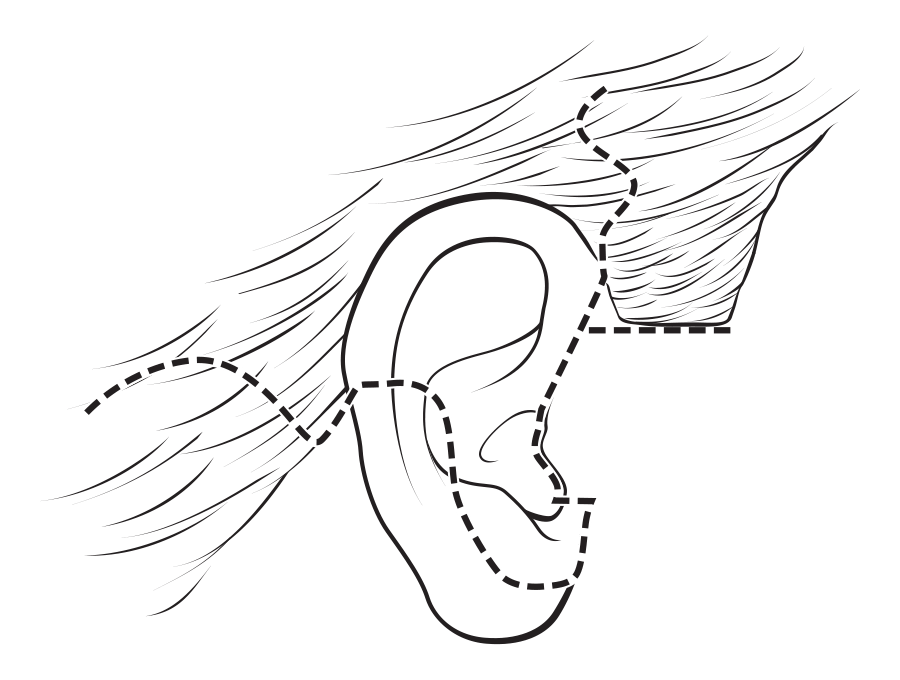
The facelift procedure can be performed in the subcutaneous plane, the sub-SMAS (deep) plane, the subperiosteal plane, or a combination of the above. Each of the most commonly used techniques is described in the following sections. Subcutaneous Facelift The original facelift consisted of subcutaneous undermining only. The technique is still useful for an occasional patient, […]
Facelift Anatomy
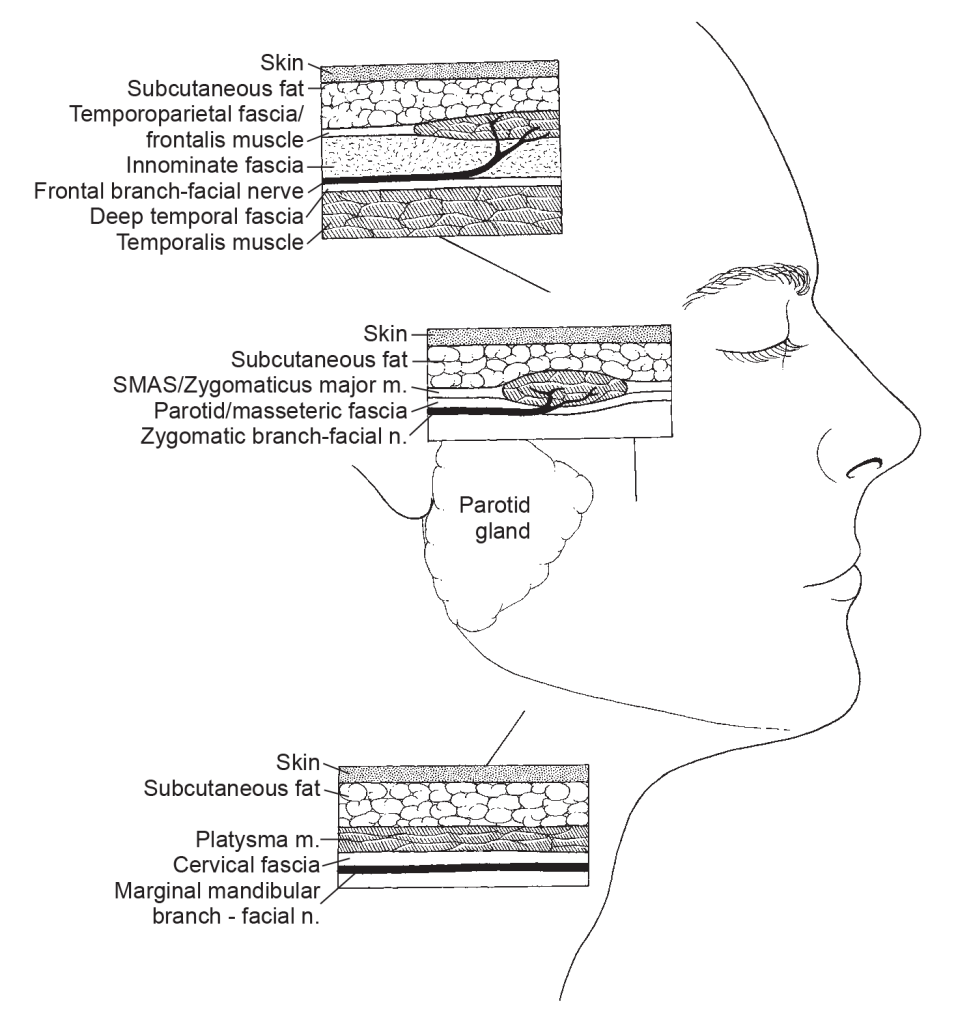
If either skin undermining alone or subperiosteal undermining alone is performed, the surgeon can, to some extent, ignore the anatomy. These two planes of dissection are safe. Manipulation of the tissues between these two planes, however, necessitates an understanding of and constant attention to the anatomy to avoid complications. Anatomic Layers There are five layers […]
Anesthesia
The subjects of anesthesia and which technique is the safest are poorly understood by patients. A facelift can be safely performed under local anesthesia with sedation provided by the surgeon, or by intravenous sedation or general anesthesia provided by an anesthesiologist. If the surgeon is to perform the procedure without an anesthesiologist, the patient must […]
Preoperative Preparation
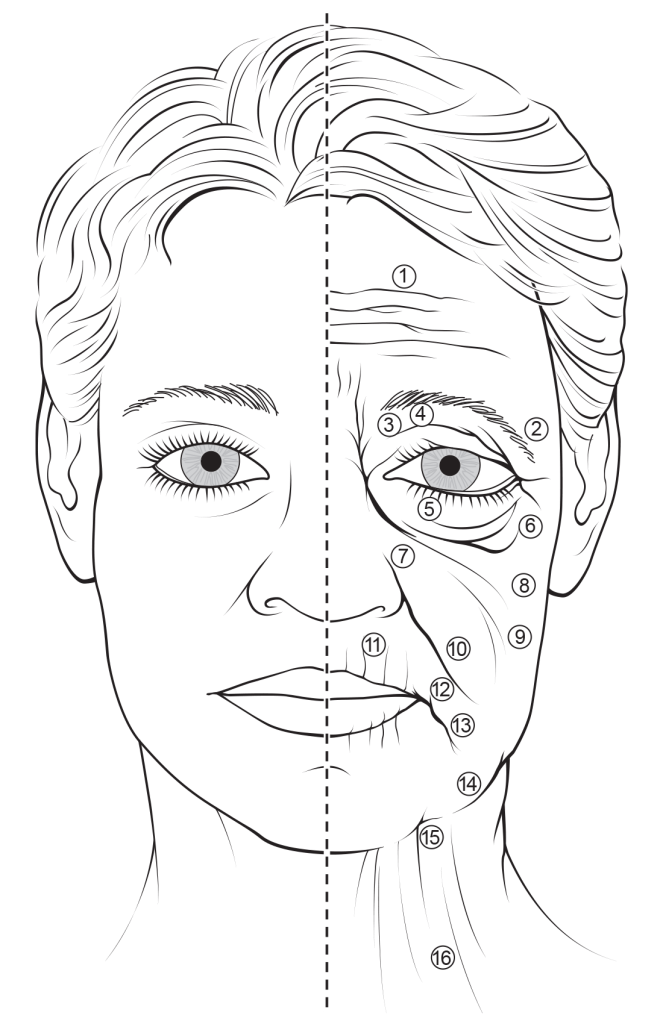
History The same compulsive medical history that is indicated before any surgical procedure is obtained when evaluating a patient for aesthetic surgery of the face. Specific inquiry is made regarding medications, allergies, medical problems, previous surgery, and smoking and drinking habits. The most common complication of facelifting is a hematoma and therefore the history focuses […]
Benefits and Limitations of Facelifting
Facelifting addresses only ptosis and atrophy of facial tissues. It does not address, and has no effect on, the quality of the facial skin itself. Consequently, facelifting is not a treatment for wrinkles, sun damage, creases, or irregular pigmentation. Fine wrinkles and irregular pigmentation are best treated with skin care and resurfacing procedures (see Chapters […]