
What is Corrective Rhinoplasty?
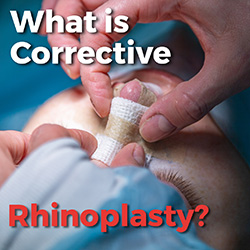
If you’ve ever seen an episode of a reality program on failed cosmetic procedures, you would know that one of the most common subjects is having bad nose jobs “fixed”.
What they really mean is “corrective rhinoplasty”. Corrective rhinoplasty, revision rhinoplasty, and secondary rhinoplasty are all names for the same thing; that is, they describe surgical procedures performed on noses that have undergone previous surgery.
Rhinoplasty is a surgical alteration of the bony and cartilaginous nasal architecture in order to improve the appearance, and often the function, of the nose. According to the 2020 survey of The Aesthetic Society (The American Society for Aesthetic Plastic Surgery) rhinoplasty is the 5th most common plastic surgery performed. It is also the most common plastic surgical procedure performed on teenagers.
Your Recovery Guide After a Rhinoplasty
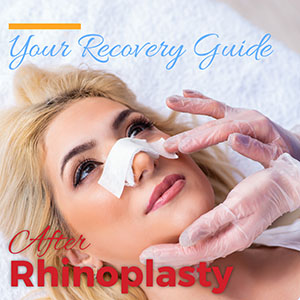
Are you excited to see the results of your nose job? Curious if the road to recovery after having a rhinoplasty is difficult or painful? Well, here is your recovery guide for nasal surgery. Listed below are the things that you can expect and the steps that you should take to heal faster with minimum discomfort.
Follow the doctor’s advice
Although it is good to do research, it is always best to follow your surgeon’s advice. First of all, every surgeon has slightly different “rules” that he/she will want you to follow. Secondly, the recovery will vary slightly depending on exactly which maneuvers were performed. A procedure to reduce a hump will have a quicker recovery than, for example, a rhinoplasty in combination with a septoplasty in which multiple cartilage grafts were placed in the nose. In the old days, surgeons placed packing in the nose which was a source of discomfort but that is rare these days. The surgery takes from 1-3 hours and is really not very painful. Most patients do not require opioids during the recovery period.